01 / LIGHT
Sunrise, sunset and cloud cover
Lower light can change how fish use shallow water and cover. Midday can still be productive, especially around shade or depth.
Will the fish bite today? Conditions such as light, wind, water temperature and weather changes can influence where and when fish feed. StrikeVision AI helps you review those signals before you cast.
Use bite-window estimates as a starting point, then adapt to what you see on the water. No forecast guarantees a catch.
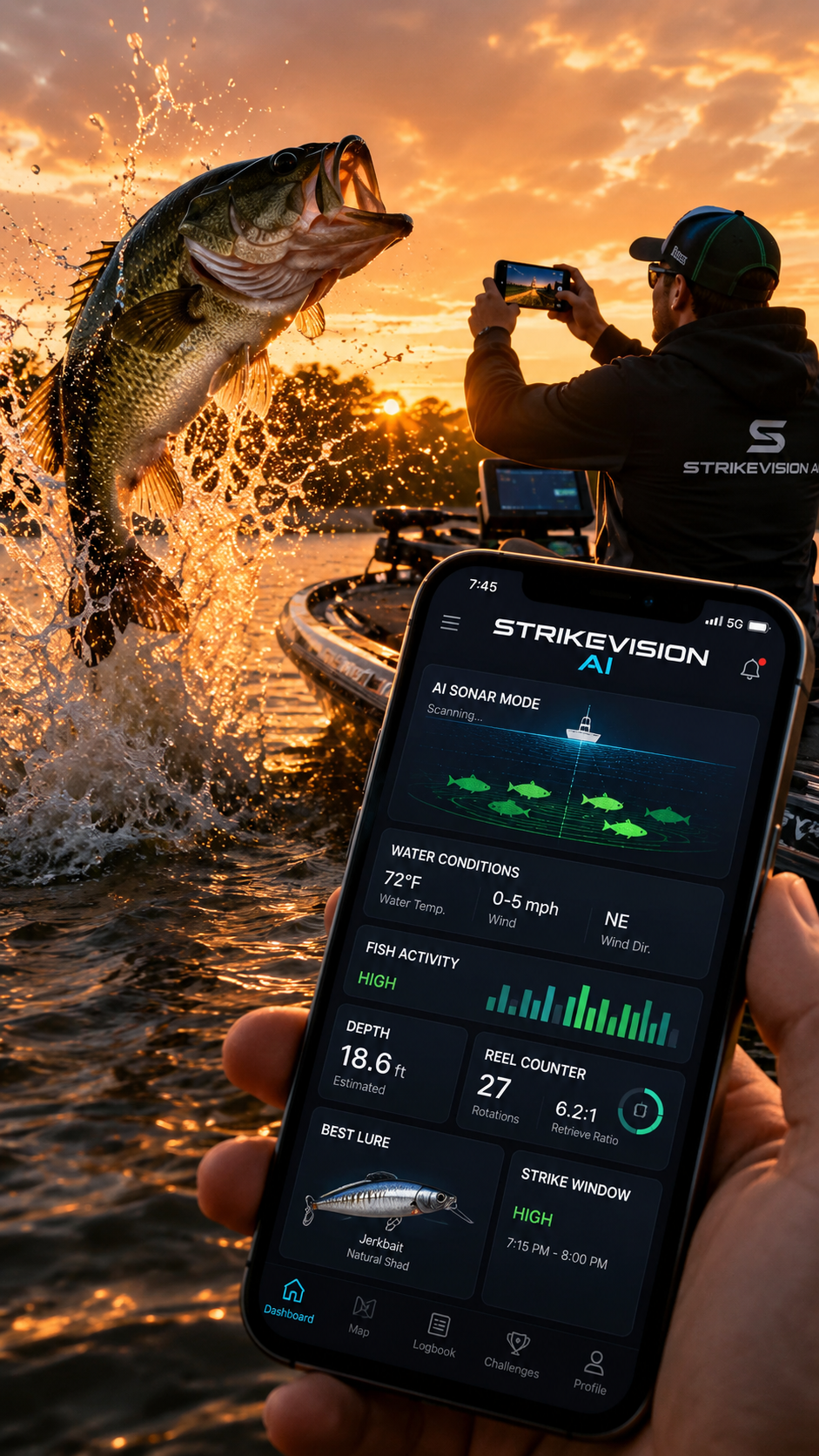
Plan your fishing day with conditions, lure choices and past catch patterns.
There is no single magic number that predicts a bite. Compare these factors together—and with what has worked on your local water.
Lower light can change how fish use shallow water and cover. Midday can still be productive, especially around shade or depth.
A passing front can bring changes in wind, cloud cover and temperature. Focus on the whole weather pattern—not one forecast symbol.
Anglers often watch rising and falling pressure. It is one clue among several, not a dependable stand-alone fish-bite predictor.
Water temperature, visibility and recent runoff can change fish location and how easily they detect a lure.
Wind can move baitfish, create current or reduce visibility. Always balance fishing opportunities with safe boating conditions.
Past catches at similar times, locations and conditions can help you identify patterns worth testing again.
A bite window is a period when fish may be more willing to feed or strike. It can last minutes or hours and may shift because of bait movement, light, temperature, current and other factors.
A prediction can suggest when to be ready; it cannot know where every fish is or what a fish will do. Look for signs such as baitfish, surface activity, structure and previous productive areas.
These are useful starting points, not universal rules. Specific species, season and local water conditions can change the outcome.
| Situation | What it may mean | Fishing idea to test |
|---|---|---|
| Early morning or evening | Lower light may encourage fish to move into feeding areas. | Check shallow cover, edges and visible bait activity. |
| Bright midday | Some fish may hold tighter to shade, cover or deeper areas. | Work docks, vegetation edges or depth transitions. |
| Windy shoreline | Wind may concentrate forage and create surface disturbance. | Try a lure you can control in the wind; avoid unsafe water. |
| Fresh muddy runoff | Visibility may fall and fish location may shift. | Try visible profiles, vibration and slower presentations. |
| Cold water | Fish activity and lure response may differ from warm-water patterns. | Try adjusting depth and retrieval pace methodically. |
Morning forecast: The day begins sunny, with increasing cloud cover and a moderate afternoon breeze.
Initial plan: Start around shaded shoreline cover and note which areas have visible bait. Later, compare wind-exposed points with protected water.
Adjustment: If the fish are not responding, change one variable—depth, retrieve speed or lure—rather than assuming the forecast must be right.
Illustrative fishing plan only. It is not a real-time forecast or an app-generated prediction.
The StrikeVision AI homepage describes bite-prediction tools that consider weather, pressure, moon phase, temperature, time of day and catch history to estimate fishing activity.
Its other advertised tools help you select lures, think about retrieve speed, plan casts and remember successful patterns. Use the app’s results as guidance—not as a guarantee that fish will bite.
No. Bite forecasts estimate promising windows from available conditions and patterns. Fish behavior changes and no app can promise a bite.
Pressure often changes with weather systems, which can also affect wind, light, water movement and angling conditions. Pressure alone cannot determine whether fish will feed.
Low-light windows can be productive for many species, but water temperature, cover, weather, season and local patterns can matter more on a given day.
It depends on conditions. A front may change light, wind, runoff and water clarity. Avoid fishing during lightning or unsafe weather.
The StrikeVision AI website describes tools that consider weather, pressure, moon phase, temperature, time of day and catch history to estimate likely bite activity. Predictions are guidance rather than guaranteed outcomes.
Explore bite predictions, AI lure recommendations and fishing trip planning in StrikeVision AI.
ONE-TIME PAYMENT · NO MONTHLY SUBSCRIPTION
OPEN STRIKEVISION AIPrice as advertised on the StrikeVision AI homepage. Confirm final purchase terms in the app.